

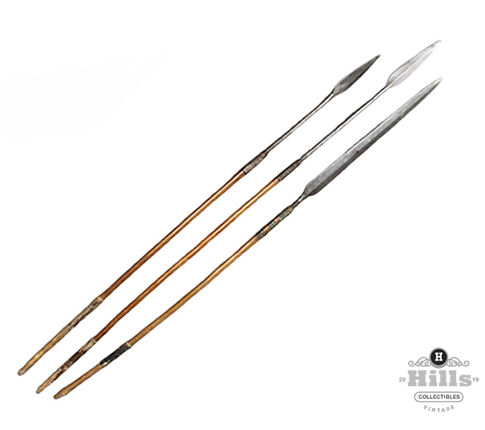
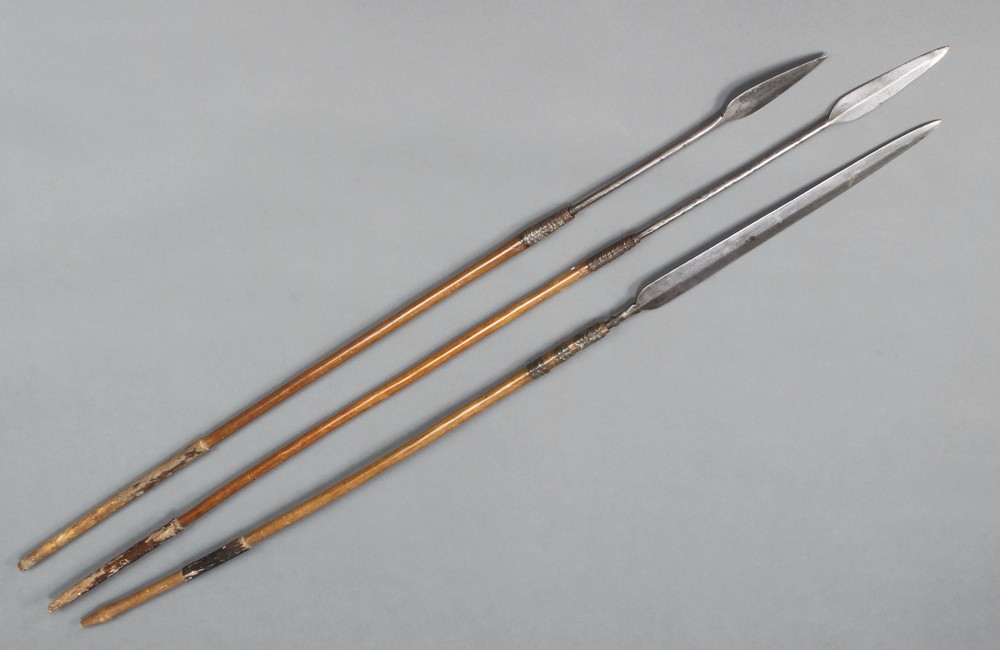
Set of Three Antique Swazi Spears – 19th/20th C
Overview
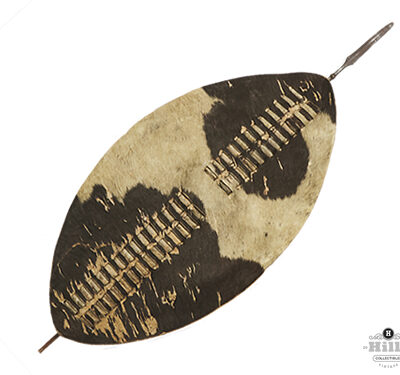
Discover this rare collection of three authentic Swazi spears from the late 19th to early 20th century, originating from the Nguni peoples of southern Africa (modern-day Eswatini/Swaziland). These hand-forged weapons showcase traditional craftsmanship, blending indigenous designs with possible European influences through traded metal. Swazi spears, like those of their Zulu neighbors, were essential for hunting, warfare, and ceremonial purposes, symbolizing strength, protection, and cultural heritage. The Nguni shield and spears are even featured on Eswatini’s national flag, representing vigilance and unity.
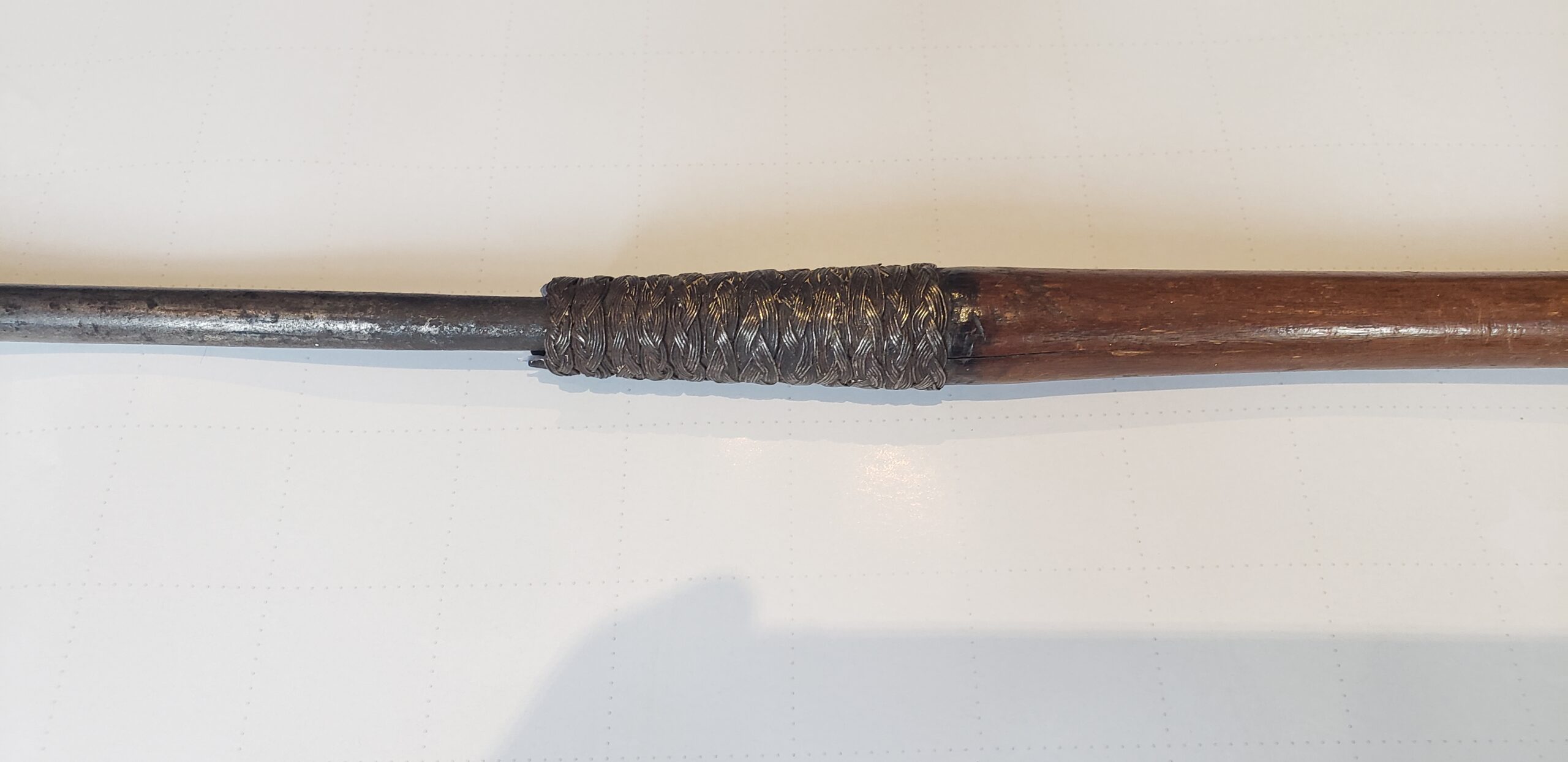
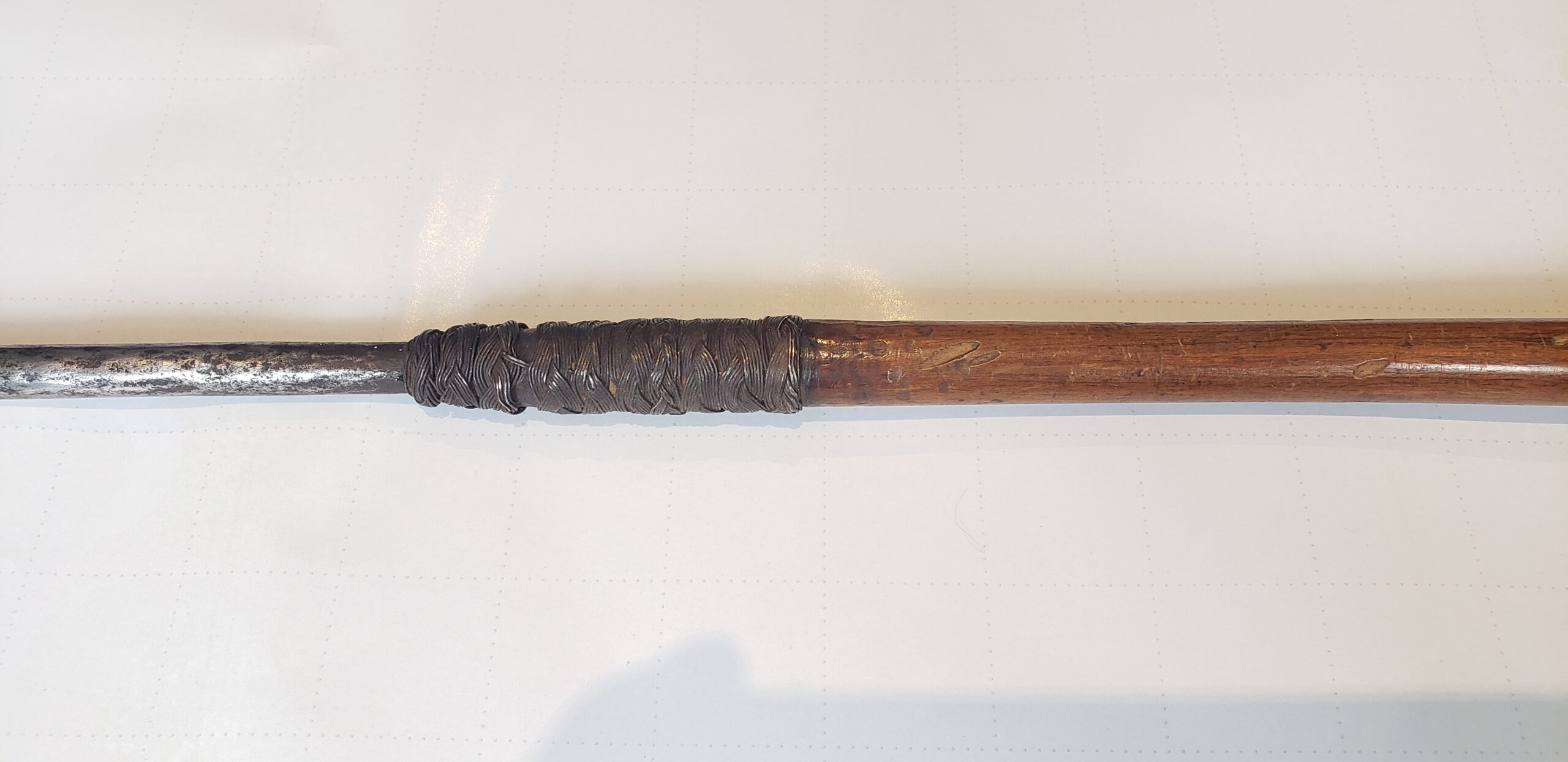
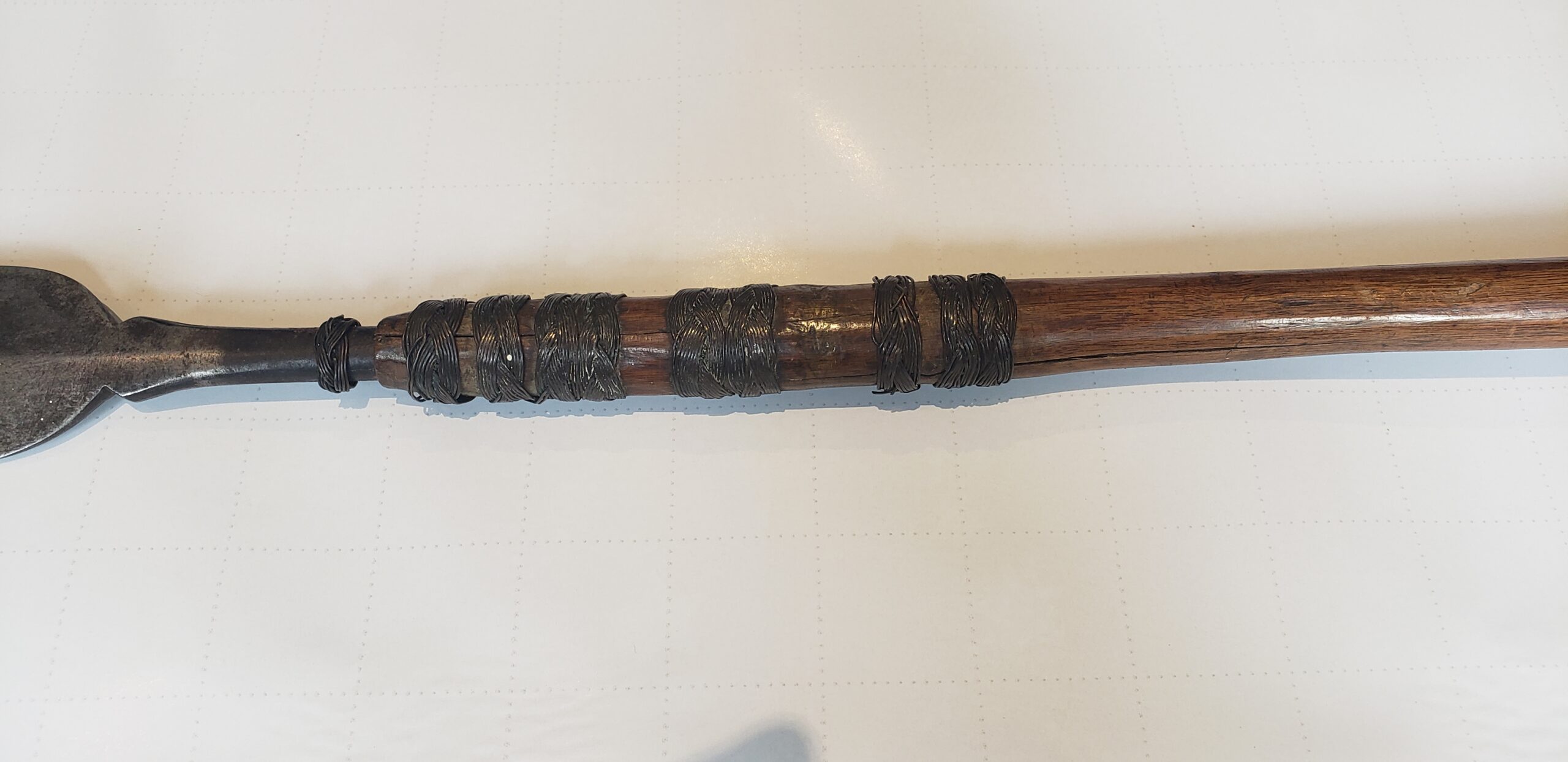
These spears feature wooden shafts with intricate wire or hide wrappings at the hafts— a hallmark of Swazi design, often using cow tail skin or similar materials for grip and decoration, particularly at the base. This differs from Zulu spears, which typically have a flared butt for balance in throwing. The blades exhibit Zulu-inspired features, such as notches at the base of the tang for secure attachment and better penetration. Such cross-cultural elements highlight the shared Nguni heritage between Swazi and Zulu tribes, where military innovations like short spears (iklwa or assegai) revolutionized warfare in the region during the 19th century.
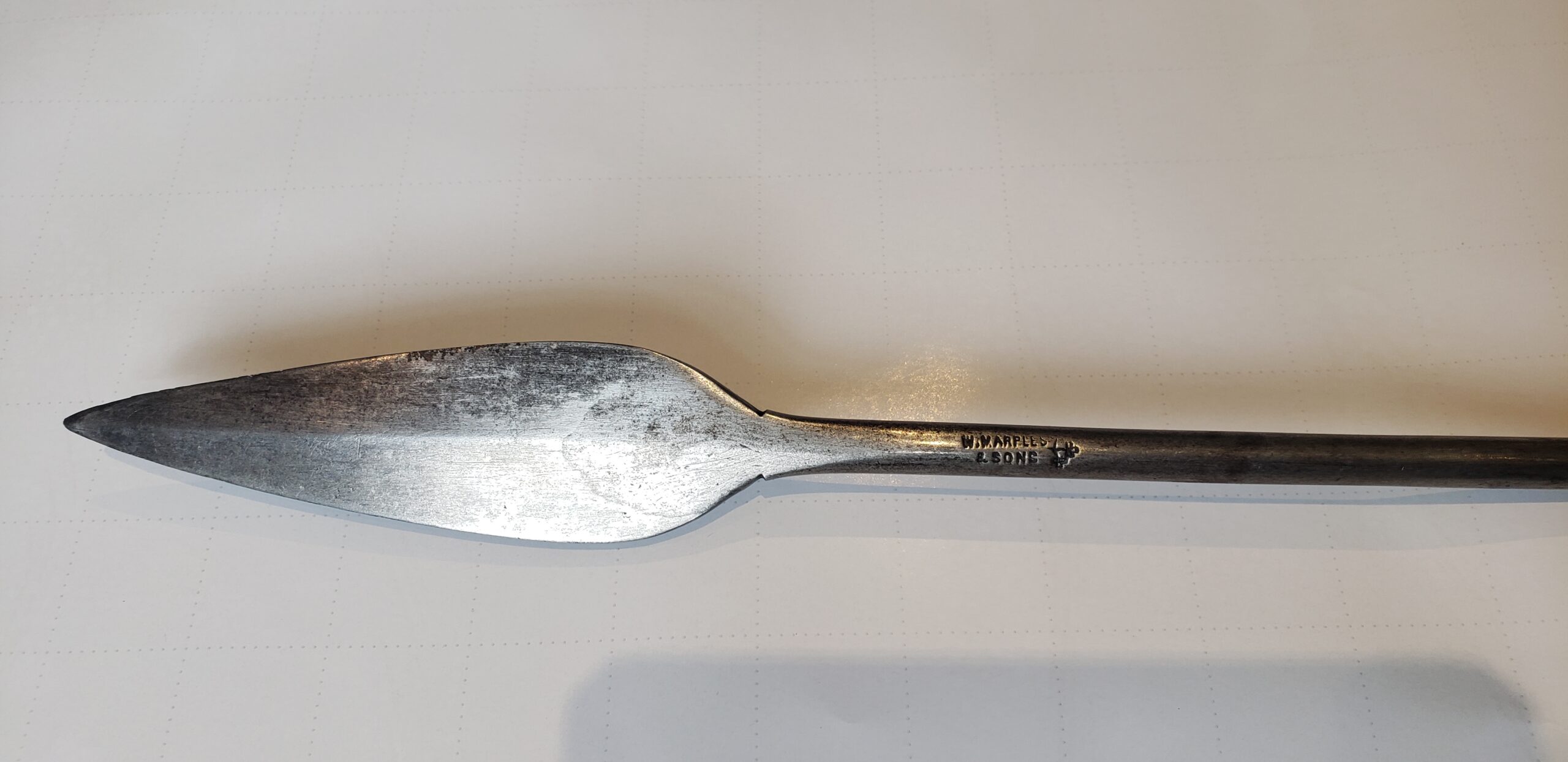
One spear bears the stamp of renowned Sheffield toolmaker W. Marples & Sons, suggesting the blade was repurposed from British-exported steel rods traded to African blacksmiths. This adds a fascinating layer of colonial history, as metal from UK manufacturers was commonly exchanged in southern Africa, where local smiths forged it into weapons. Perfect for collectors of African ethnographica, military history enthusiasts, or those interested in Victorian-era colonial artifacts.
Detailed Descriptions
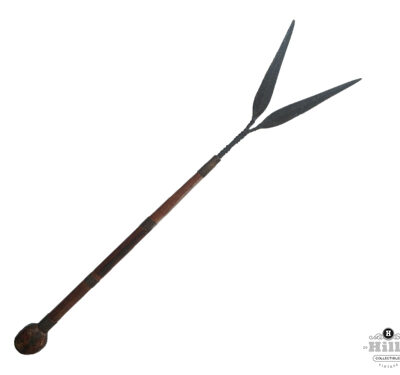
- Double-Bladed Spear with 15cm Blade
- Length: Approximately 120cm overall (shaft + blade).
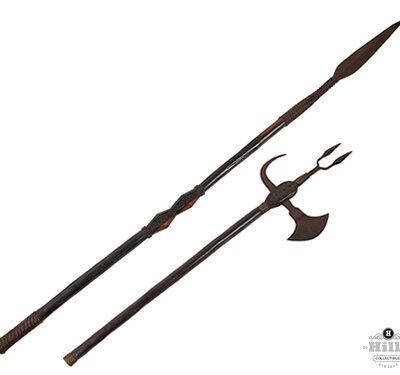
- Blade: Narrow, double-edged iron head, 15cm long, with a pointed tip ideal for thrusting or throwing. Features a subtle notch at the tang base—a Zulu-influenced design for enhanced haft security.
- Shaft: Straight wooden pole with aged patina, secured to the blade via tightly wrapped wire bindings (possibly mimicking traditional cow tail skin). The base shows decorative wrapping, typical of Swazi hafts for improved handling during hunts or battles.
- Historical Notes: This compact design echoes the short spears popularized by Zulu king Shaka in the early 19th century, adapted for close-combat tactics in the “buffalo horns” formation. Likely used as a versatile weapon in Swazi raids or ceremonies.
- Leaf-Shaped Double-Bladed Spear with 42cm Blade
- Length: Approximately 150cm overall.
- Blade: Broad, leaf-shaped iron head, 42cm long, double-edged for slashing and piercing. Includes a pronounced notch at the tang’s start, blending Swazi utility with Zulu stylistic elements for lethality.
- Shaft: Robust wooden handle with multiple bands of braided wire wrapping at the junction and base, providing reinforcement and a decorative touch. The wrapping style aligns with Swazi traditions, where hafts were often adorned with animal hides for grip and cultural significance.
- Historical Notes: Larger leaf blades like this were suited for both throwing (assegai style) and stabbing, reflecting the evolution of Nguni weaponry. Swazi smiths, a prestigious hereditary craft, would forge such pieces in isolated forges, incorporating traded iron for superior durability.
- Leaf-Shaped Spear Marked “W. Marples & Sons”
- Length: Approximately 140cm overall.
- Blade: Wide, leaf-shaped iron head, about 30cm long, with a sharp point and etched stamp reading “W. MARPLES & SONS” along the tang. This marking indicates Sheffield, England origin, from a family-run toolmaker established in 1828 by William Marples Jr. The company, which became William Marples & Sons in 1860 and Ltd. in 1898, specialized in edge tools like chisels and planes. By the late 19th century, they employed hundreds and exported globally, including to colonial Africa. The blade likely started as a British steel rod or tool blank, traded to Swazi blacksmiths who reforged it into this spear— a common practice during the era of European-African trade. Features the characteristic Nguni notch for tang stability.
- Shaft: Wooden pole with intricate wire bindings in multiple sections, including decorative bands near the base, evoking Swazi cow tail skin traditions.
- Historical Notes: This piece is particularly appealing to collectors due to the maker’s mark, which dates it to the late 19th/early 20th century. W. Marples & Sons was a powerhouse in Sheffield’s tool industry, acquiring firms like Thomas Ibbotson & Co. in 1905. The UK provenance suggests it was a souvenir from British soldiers returning from the Anglo-Zulu War (1879) or related conflicts, where troops often collected tribal weapons as trophies. The war saw British forces clash with Zulu armies, but Swazi allies occasionally participated, and artifacts flowed back to England via colonial markets.
Historical Context
Swazi spears evolved from ancient Nguni traditions, where ironworking was a sacred male craft surrounded by taboos. Unlike Zulu spears with their flared butts for throwing balance, Swazi versions emphasized haft decorations like cow tail wrappings for ceremonial and practical use. The notch at the blade base, seen here, improved weapon integrity—a feature shared with Zulu iklwa (short spears) innovated by the legendary King Shaka Zulu for hand-to-hand combat.
These spears may tie into the broader colonial narrative: During the Anglo-Zulu War, British soldiers brought back Zulu and Swazi artifacts as souvenirs, including shields, knobkerries, and spears. The presence of a British maker’s mark underscores trade networks; European metal was prized in Africa for its quality, often reforged by local artisans. This set offers a tangible link to the era’s military history, from Shaka’s reforms to colonial encounters.
Condition Report: Good overall antique condition, fully commensurate with 100+ years of age, traditional use, handling, and storage.


Reviews
There are no reviews yet.