

Antique Swazi Royal Battle Axe
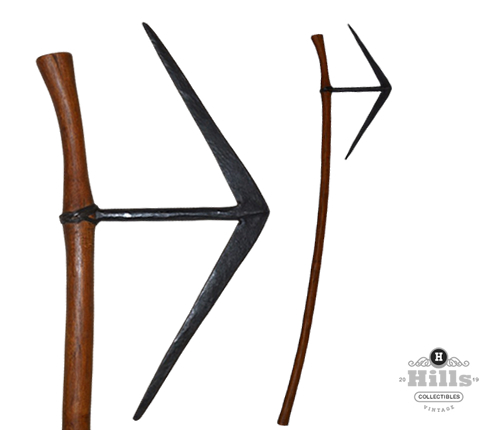
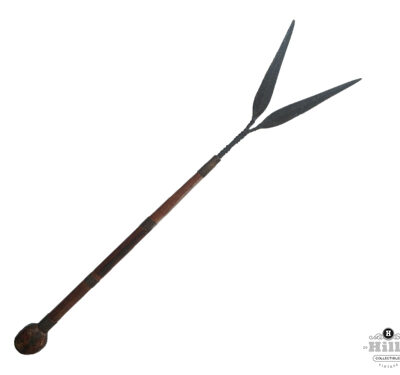
This antique iNhlendla is a premier example of Swazi royal regalia. Unlike the later mid-century ceremonial versions, this piece dates back to the late 19th or early 20th century, showcasing the traditional blacksmithing and weaving techniques that defined the height of the Swazi Kingdom’s material culture.
The Iconic Arched Haft
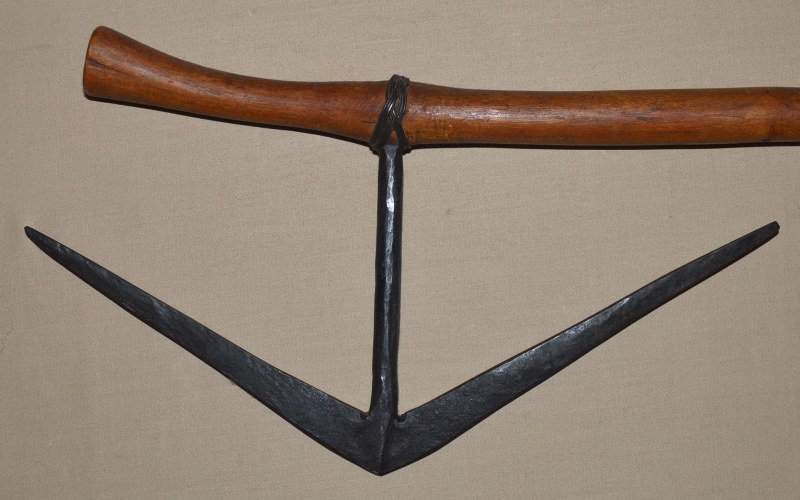
The staff features a distinct, elegantly arched hardwood haft. In the tradition of Southern African ethnographic staffs, this curvature is a deliberate design element rather than a defect. The arch enhances the scepter’s silhouette when carried by a chief or royal representative, symbolizing a “predator’s claw” or a royal decree.
Master-Tier Wire-Work & Construction
-
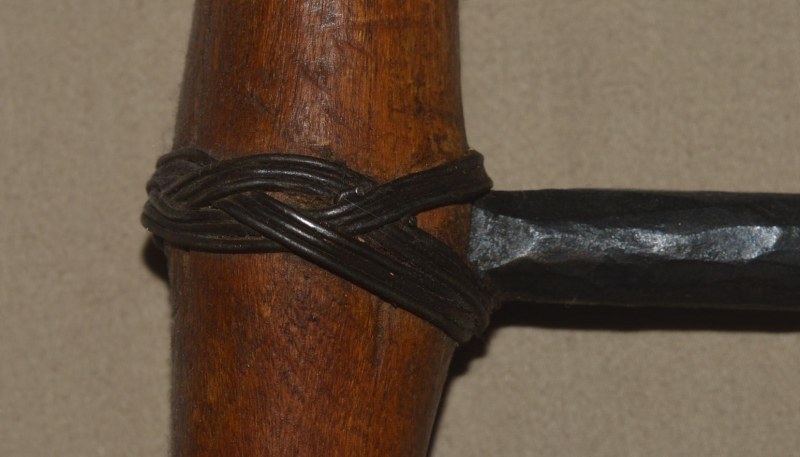
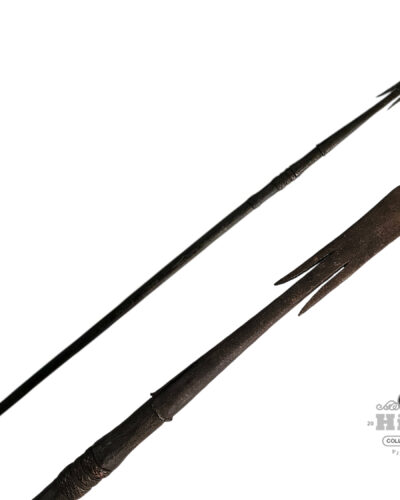
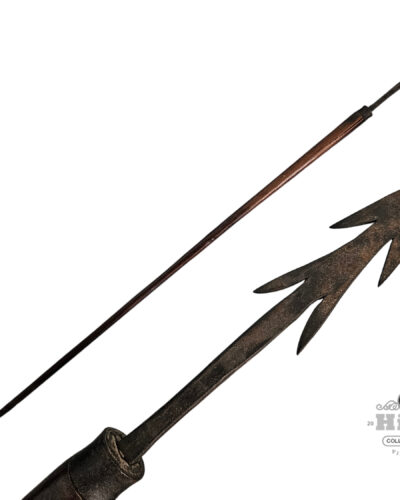
Decorative Binding: The haft and tang are secured with intricate, braided wire-work. This traditional “wire-weaving” was a hallmark of prestige items from this era, serving as both a structural reinforcement and a visual marker of high-status ownership.
-
Hand-Forged Iron: The blade is hand-forged with a sharp, geometric profile. Close-up views reveal the subtle hammer marks of a master blacksmith.
-
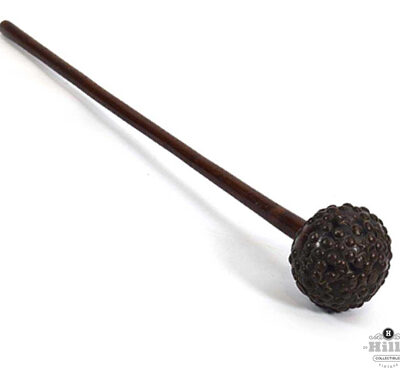
Historical Patina: The piece exhibits a deep, lustrous patina. The indigenous hardwood has aged to a warm, dark honey tone through decades of ceremonial handling, while the iron remains stable with a rich, dark oxidization.
Swazi Battle Axe Cultural Legacy
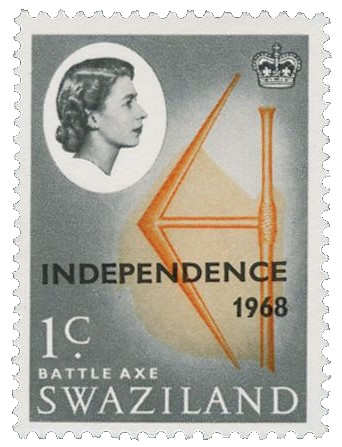
The iNhlendla remains a cornerstone of Swazi identity, famously depicted on the 1968 Independence stamp and still carried today by the King of Eswatini during state rituals like the Reed Dance. This specific antique version is documented in scholarly works such as SiCeBile: Swaziland’s Cultural Adornment and Artefacts.


Reviews
There are no reviews yet.