

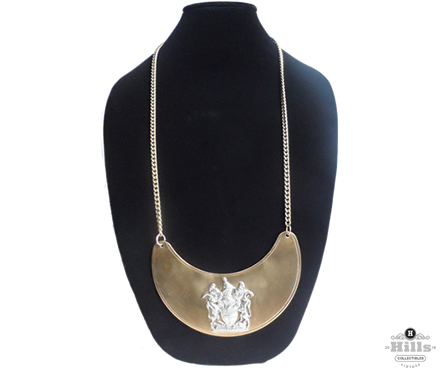

This exceptional Rhodesian Chief’s Gorget served as a formal badge of office, issued to traditional tribal leaders (Mambo or Induna) by the Department of Internal Affairs (INTAF). These gorgets were more than just regalia; they were the physical manifestation of authority, used to bridge the gap between traditional tribal governance and the colonial administrative state.
Design & Symbolism
-
The Crest: Features a high-relief, silver-toned (white metal) Rhodesian Coat of Arms. The design includes two sable antelopes supporting a shield with a pickaxe, topped by the iconic Zimbabwe bird.
-
Construction: The base is crafted from heavy, polished brass, shaped in the classic crescent gorget style.
-
Function: Worn around the neck via a heavy-duty brass link chain, these pieces were designed for durability and visibility during official ceremonies and rural administrative duties.
Condition & Provenance
-
Condition: Excellent vintage state. The brass displays an authentic, warm patina with minor surface “field wear” (light scratches) consistent with genuine use. The white metal central badge remains crisp, and the original chain is fully intact.
-
Reverse: Features the original mounting prongs, providing stability when worn over a uniform or for secure mounting in a display case.
Historical Context
During the era of Southern Rhodesia and the subsequent UDI period (1965–1979), the colonial government relied on chiefs to manage Tribal Trust Lands. This piece reflects the complex “Mambo” system where traditional leadership was formalized through bureaucratic tools. This specific design aligns with the post-1953 patterns used throughout the Rhodesian Bush War era, up until the transition to Zimbabwe in 1980.
The Hierarchy of Tribal Authority (1898–1980)
The administrative structure of the Department of Internal Affairs (INTAF) utilized a specific visual language of brass and enamel badges to designate rank within rural governance.
1. Chief (Mambo / iNduna)
The highest level of traditional leadership, responsible for overseeing entire tribal areas.
-
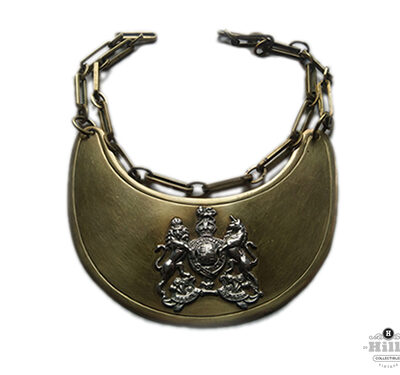
Early Gorgets (1898–1953): Early versions featured a lion motif (1898–1920s) or the British Royal Coat of Arms (1920s–1953).
-
The Rhodesian Gorget (1960s–1980): The large crescent brass plate with the Rhodesian Coat of Arms, typically worn by the Chief during official duties.
-
Name Badges: Enamel oval badges (often green and gold) were also issued in the 1960s, sometimes bearing the specific name of the Chief and their Tribal Land Authority.
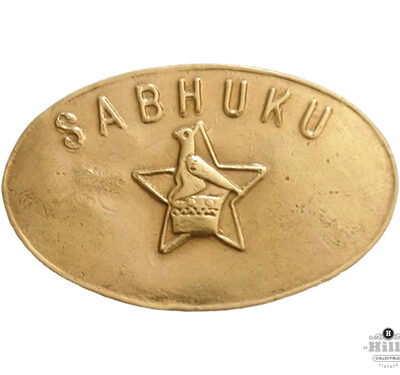
2. Headman (Sabhuku / Umlisa)
Acting as a subordinate to the Chief, the Headman managed larger clusters of villages.
-
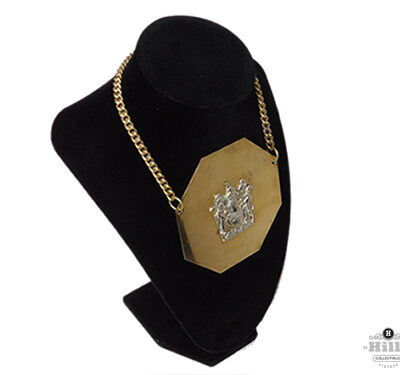
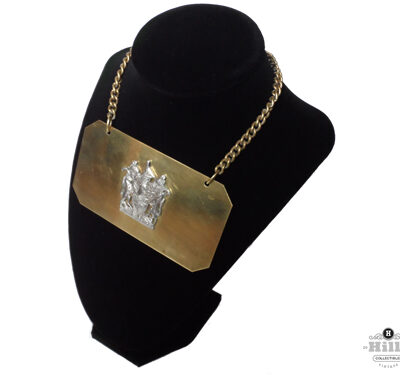
The Headman’s Badge: Unlike the Chief’s crescent gorget, these were typically rectangular or octagonal brass plates featuring a central coat of arms.
-
Name Badges: Rectangular red enamel badges were also utilized to identify Headmen during the 1960s–1979 period.
3. Kraal or Village Head (Sadunha / iUpatwe webhuku)
The primary point of contact for individual communities.
-
Kraal Head Badge: These were smaller, oval brass badges meant to be worn on clothing, featuring the coat of arms and the “Kraal Head” designation.
4. Supporting Officials & Specialists
The administration also issued badges for those who enforced the law or demonstrated technical excellence within the community:
-
Chief’s Messenger: Identified by oval green badges (clothing) or brass arm badges (1920s–1970s).
-
Headman’s Messenger: Distinguished by red oval enamel badges.
-
Special Sections: Specialized badges existed for the African Development Fund (A.D.F.) Game Section, often featuring a buffalo motif.
-
Excellence Awards: Specific “Craftsman” badges in blue, green, and red were awarded to tribesmen for excellence in agricultural craftsmanship.


Reviews
There are no reviews yet.