

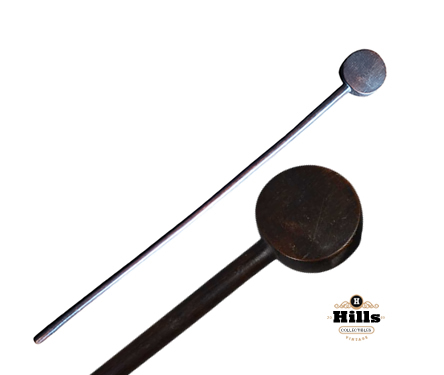
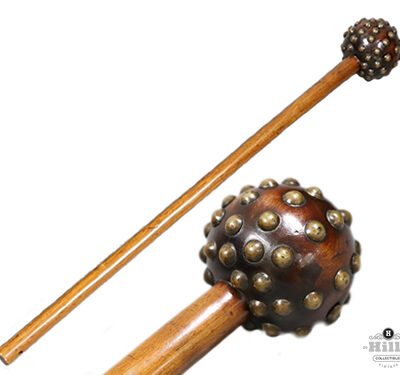
Exceptional 19th-20th Century Flat-Top Knobkerrie (Iwisa)
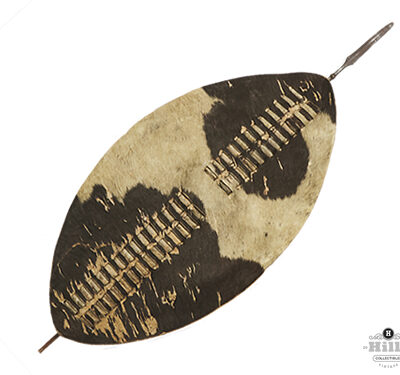
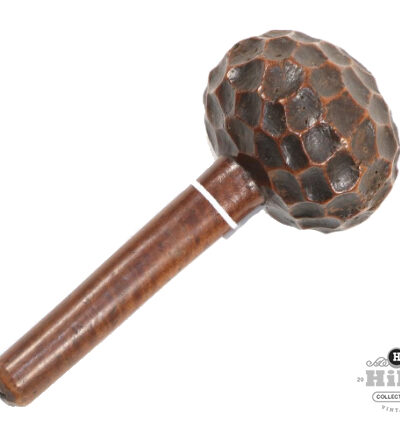
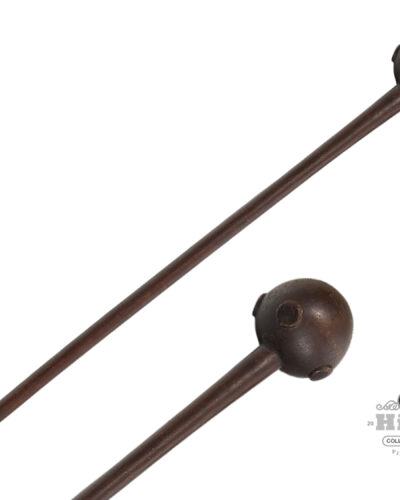
This exquisite example of Southern African material culture represents the pinnacle of Zulu and Swazi (Eswatini) craftsmanship. Characterized by its distinctive flat-topped head and sleek, tapering shaft, this knobkerrie (or iwisa) is a dual-purpose artifact—historically a formidable weapon and, more prominently, a vital symbol of status and authority during ceremonial gatherings.
Design & Aesthetics
The artifact is carved from a single piece of dense indigenous hardwood, selected for its durability and grain. It features a perfectly balanced, disc-shaped head that transitions seamlessly into a slender, straight haft.
- Patina: The wood exhibits a rich, dark chestnut patina, a result of decades of careful handling and traditional oiling. This deep, lustrous finish highlights the natural beauty of the timber while speaking to its age and historical use.
- Form: The “flat-top” variant is highly sought after by collectors for its geometric precision. The zoomed-in detail reveals a smooth, unadorned surface, emphasizing the minimalist elegance favored in high-status ceremonial pieces.
Historical Context
Throughout the 19th and early 20th centuries, the knobkerrie was an essential accessory for Zulu and Swazi men. While its origins are rooted in combat, the flat-topped style became a staple of ceremonial life, carried with pride during traditional weddings, royal festivals, and community assemblies. It served as an extension of the owner’s identity and “mana.”
Collector’s Specifications
- Type: Flat-Top Ceremonial Knobkerrie / Iwisa.
- Material: Hardwood with deep chestnut natural patina.
- Condition: Excellent museum-grade condition, showing authentic age-related wear without compromising structural integrity.


Reviews
There are no reviews yet.