-
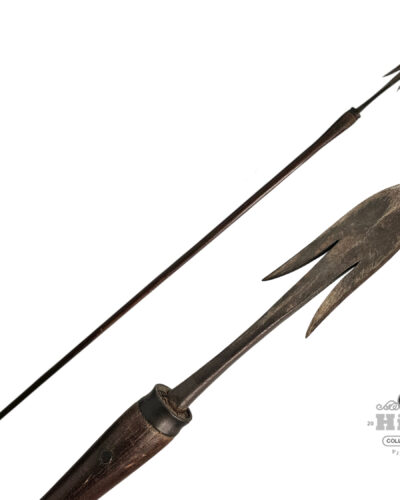
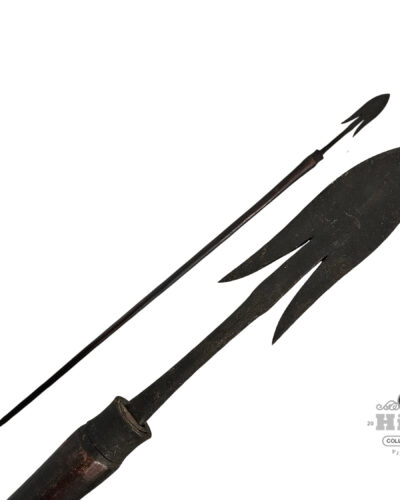
Medium Size Bontoc Igorot Spear from Luzon, the Philippines
- Period: Late 19th – early 20th century.
- Origin: Cordillera Central, Northern Luzon, Philippines.
- Primary use among Bontok highland communities (Mountain Province areas).
- Provenance: US Market, Ex-private USA collection.
- Materials: Hand-forged iron single-barbed (one prominent pair of opposing barbs) spearhead and conical butt cap, tropical dark hardwood shaft,
-
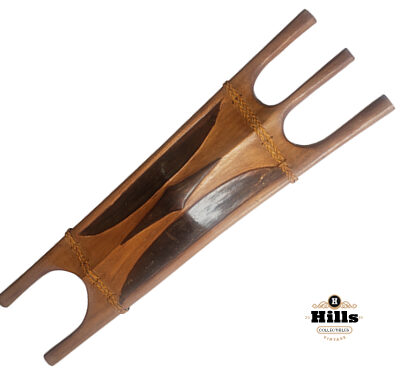
Authentic Kalinga Igorot kalasag war shield with dark painting
- Period: Late 19th – Early 20th Century
- Origin: Cordillera Central, Northern Luzon, Philippines
- Provenance: Canadian Market, Provenance Documented
- Materials: Carved single-piece tropical hardwood (dense local wood such as narra or related species), reinforced with thick woven rattan bindings; traditional charcoal- or soot-based pigment applied to the front surface.
-
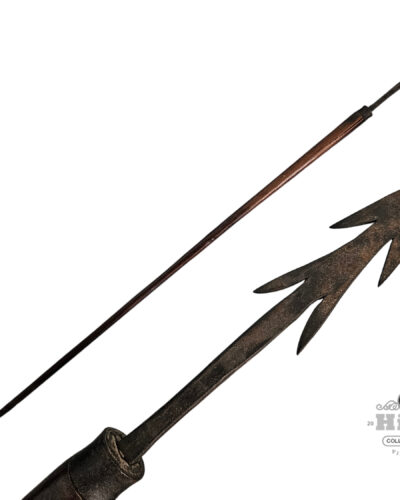
Rare Kalinga Bontoc Multi-Barbed Spear (Sinalawitan Type)
- Period: Late 19th – early 20th century
- Origin: Cordillera Central, Northern Luzon, Philippines
- Primary use among Bontok, Ifugao, and Kalinga highland communities (Mountain Province, Ifugao Province, Kalinga Province areas)
- Provenance: Ex-private USA collection
- Materials: Hand-forged iron multi-barbed (4 prominent barbs) spearhead and conical butt cap, tropical dark hardwood shaft with decorative metal inlay banding on grip, traditional iron or woven rattan ferrule.
-
Philippine Igorot Falfeg Spear With Socket Tip and Spiked Metal Base
- Period: Late 19th – early 20th century
- Origin: Cordillera Central, Northern Luzon, Philippines
- Primary use: among Bontok highland communities (Mountain Province areas)
- Provenance: Ex-private USA collection
- Materials: Hand-forged iron single-barbed spearhead with socketed base, traditional woven rattan ferrule reinforcement at the socket joint, tropical dark hardwood shaft, and spiked conical iron butt cap.
-
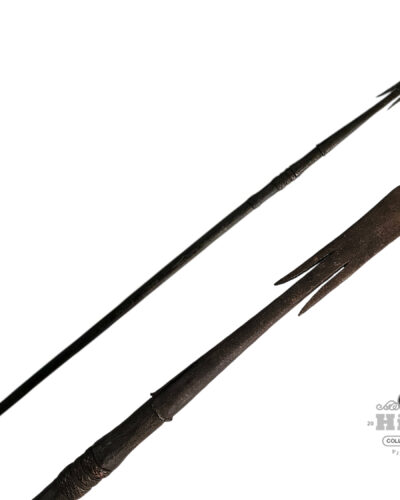
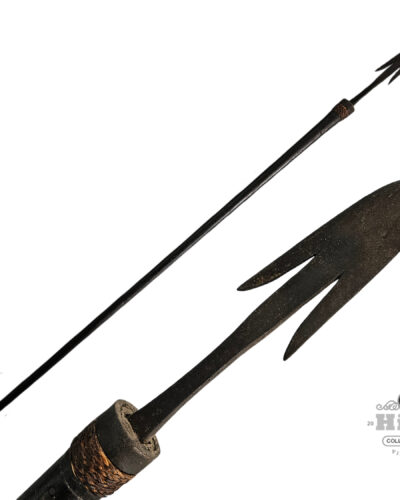
Shorter Traditional Bontoc Igorot Falfeg Spear
- Period: Late 19th – early 20th century Origin: Cordillera Central, Northern Luzon, Philippines
- Primary use: Among Bontok highland communities (Mountain Province areas)
- Provenance: Ex-private USA collection
- Materials: Hand-forged iron single-barbed spearhead, prominent traditional woven rattan ferrule binding just below a narrow metal reinforcement ring, tropical dark hardwood shaft, and conical iron butt cap.
-
Large Bontoc Kalinga Barbed Warrior Spear (Falfeg)
- Period: Late 19th – early 20th century.
- Origin: Cordillera Central, Northern Luzon, Philippines.
- Primary use among Bontok, Ifugao, and Kalinga highland communities (Mountain Province, Ifugao Province, Kalinga Province areas).
- Provenance: US Market, Provenance Documented.
- Materials: Hand-forged iron single-barbed spearhead and conical butt cap, tropical dark hardwood shaft,
-
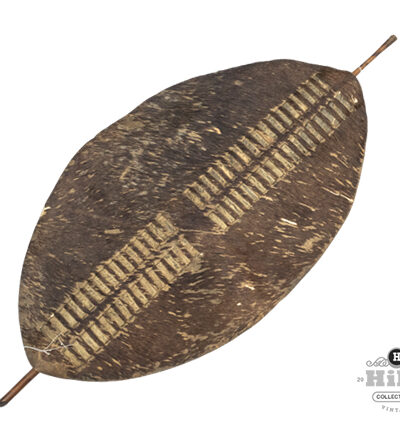
Authentic Zulu Nguni Cowhide Warrior Shield (1940s)
- Region: KwaZulu-Natal, South Africa
- Time Period: Mid 20th C.
- Tribal Group: Zulu
- Material: Sun-dried Nguni cattle hide, wood, and supple leather thonging.
- Provenance: Documented US Market / Private Collection.
- Condition: Excellent vintage condition. The hide remains taut with natural hair intact. Minor signs of age appropriate for an authentic ethnographic piece.
-
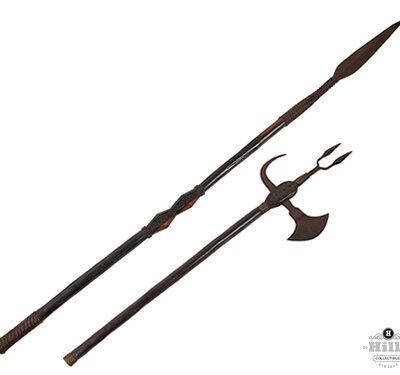
Exceptional Shona Ceremonial Axe (Gano) and Prestige Spear
- Region: Zimbabwe
- Tribal Group: Shona
- Axe Features: Rare crescent-shaped blade with bident (twin-pointed) tips.
- Spear Features: Elongated, slender iron head with decorative “chevron” or “herringbone” forging at the neck.
- Embellishments: Iconic Shona copper/brass wire-work and geometric “circle-dot” carvings.
- Provenance: Documented UK Market, documented.
-
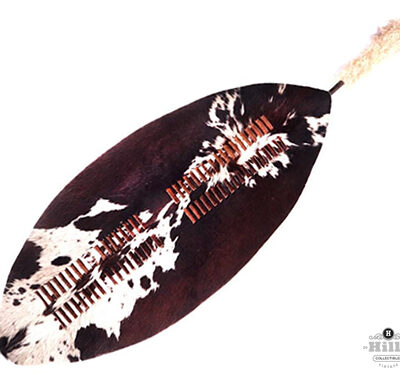
Authentic Zulu War Shield (Isihlangu)
- Region: KwaZulu-Natal, South Africa
- Type: Isihlangu (War Shield)
- Hide Pattern: Dark brown with white mottling/speckling
- Construction: Hand-cut Nguni hide, wooden central spine (Mgobo), and leather woven tabs (Amagabela)
- Provenance: Documented UK Market
- Condition: Superior vintage condition; hide is rigid and well-preserved with clear, contrasting hair colors.
-
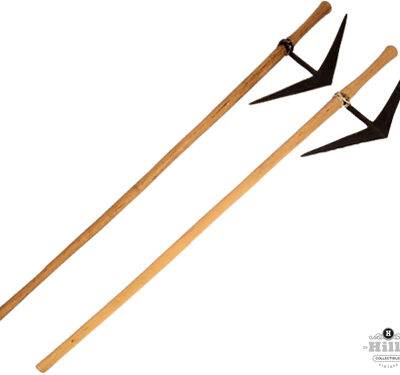
Pair of Ceremonial Swazi Battle Axes (iNhlendla)
- Type: Ceremonial Battle Axe / Royal Staff (iNhlendla)
- Origin: Botswana
- Materials: Hand-forged Iron, Indigenous Hardwood, Rawhide
- Dimensions: Approx. 150cm – 160cm in length
- Provenance: Documented, US Market
-
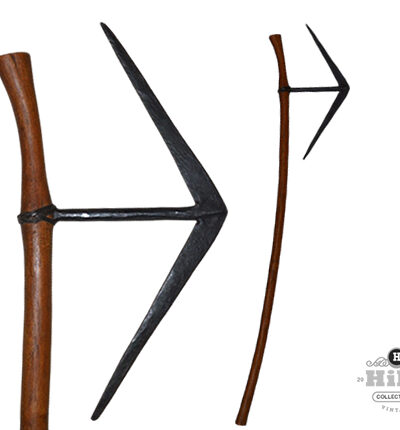
Antique Swazi Royal Battle Axe (iNhlendla)
- Type: Ceremonial Battle Axe Staff (iNhlendla)
- Origin: South Africa
- Materials: Hand-forged Iron, Indigenous Hardwood, Rawhide
- Dimensions: Approx. 150cm – 160cm in length
- Provenance: Documented, US Market
-
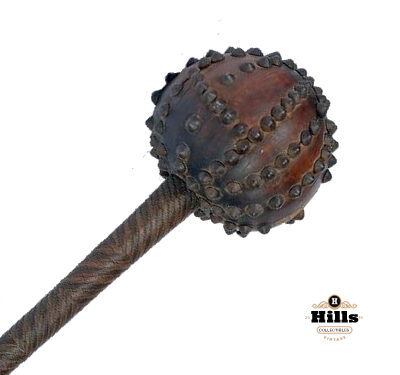
Museum Grade: Zulu Executioner’s “Studded” Knobkerrie – Mfecane I
- Origin: Zulu Kingdom, KwaZulu-Natal region, South Africa, crafted by Zulu artisans renowned for their mastery in weapon-making during the turbulent 19th century.
- Period: 19th century, aligning with the height of Zulu military innovation and the Mfecane era, a time of intense warfare and societal upheaval.
- Provenance: UK Market, verified by ethnographic experts for authenticity and cultural integrity.