-
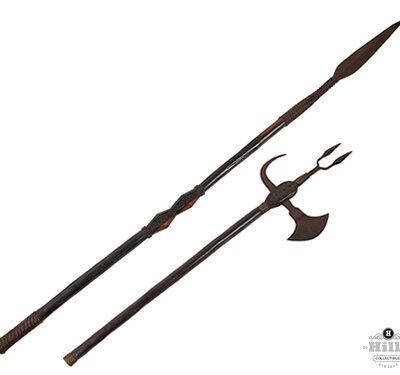
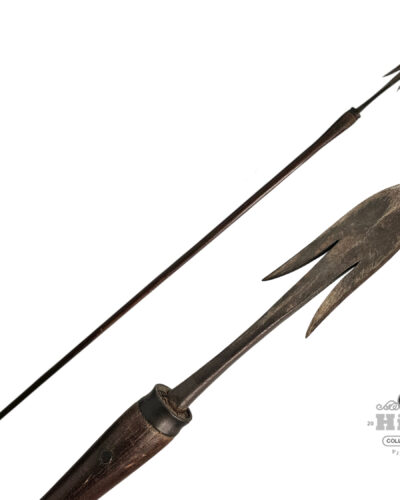
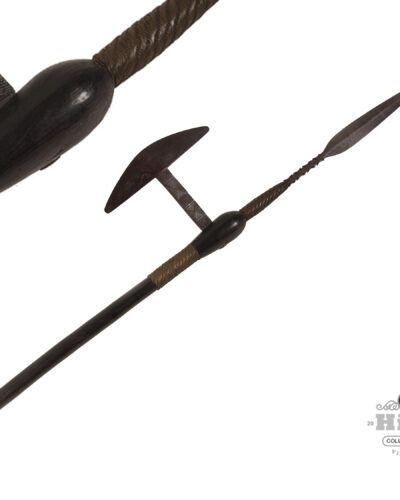
Exceptional Shona Ceremonial Axe (Gano) and Prestige Spear
- Region: Zimbabwe
- Tribal Group: Shona
- Axe Features: Rare crescent-shaped blade with bident (twin-pointed) tips.
- Spear Features: Elongated, slender iron head with decorative “chevron” or “herringbone” forging at the neck.
- Embellishments: Iconic Shona copper/brass wire-work and geometric “circle-dot” carvings.
- Provenance: Documented UK Market, documented.
-
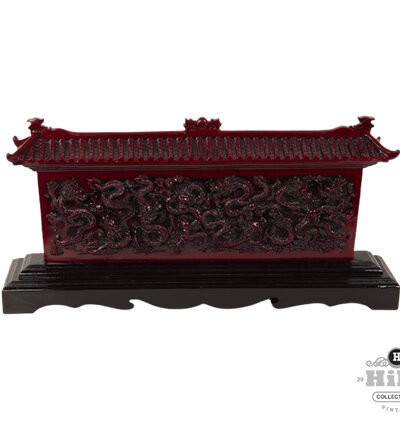
Exquisite Chinese Cinnabar-Style “Nine Dragon Wall” Sculpture
- Period: Mid-20th Century
- Primary Motif: The “Nine Dragons Taming the Waters” (Auspicious Imperial Protection).
- Artistry: Deeply undercut high-relief carving (front); Gilded Xingshu (running script) calligraphy (back).
- Materials: Carved cinnabar-lacquer composition over a reinforced core; Custom black-lacquered hardwood base.
- Signature: Inscribed and signed by the Master Wang Zuyao (王祖耀书).
- Condition: Museum-Grade. The cinnabar retains a deep, lustrous saturation; gold calligraphy is crisp and luminous; no losses to the intricate high-relief scales or fins.
-
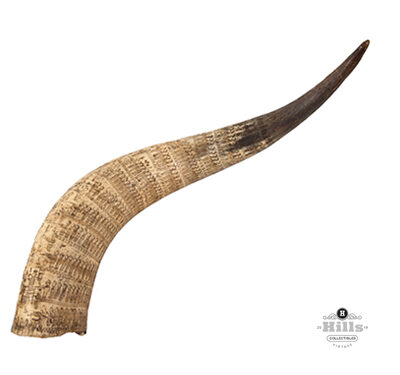
Important 19th Century Zulu Engraved Cow Horn
- Time Period: 19th Century
- Origin: South Africa
- Materials: Nguni cow horn
- Provenance: Germany, Provenance Documented: Certificate of Authenticity (COA) 19th Century Guarantee. Customs Declarations in accordance with the Cultural Property Protection Act.
-
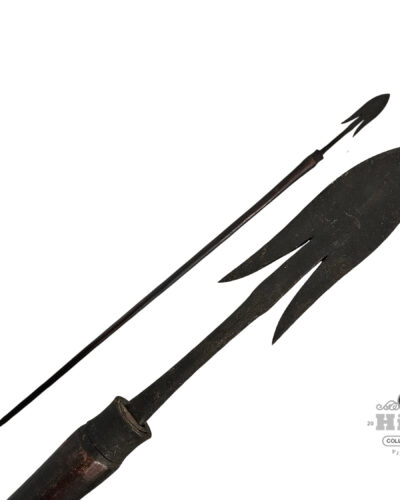
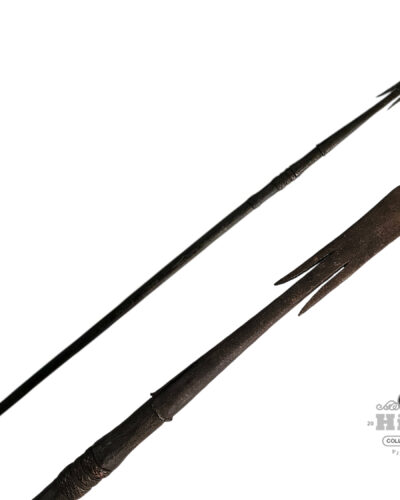
Large Bontoc Kalinga Barbed Warrior Spear (Falfeg)
- Period: Late 19th – early 20th century.
- Origin: Cordillera Central, Northern Luzon, Philippines.
- Primary use among Bontok, Ifugao, and Kalinga highland communities (Mountain Province, Ifugao Province, Kalinga Province areas).
- Provenance: US Market, Provenance Documented.
- Materials: Hand-forged iron single-barbed spearhead and conical butt cap, tropical dark hardwood shaft,
-
Medium Size Bontoc Igorot Spear from Luzon, the Philippines
- Period: Late 19th – early 20th century.
- Origin: Cordillera Central, Northern Luzon, Philippines.
- Primary use among Bontok highland communities (Mountain Province areas).
- Provenance: US Market, Ex-private USA collection.
- Materials: Hand-forged iron single-barbed (one prominent pair of opposing barbs) spearhead and conical butt cap, tropical dark hardwood shaft,
-
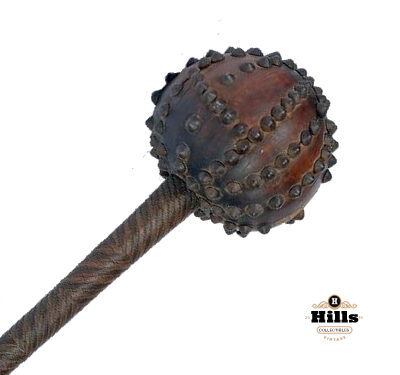
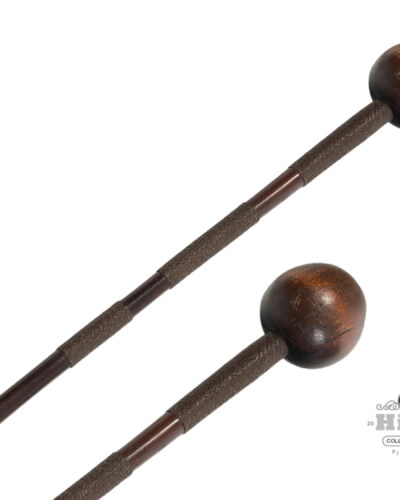
Museum Grade: Zulu Executioner’s “Studded” Knobkerrie – Mfecane I
- Origin: Zulu Kingdom, KwaZulu-Natal region, South Africa, crafted by Zulu artisans renowned for their mastery in weapon-making during the turbulent 19th century.
- Period: 19th century, aligning with the height of Zulu military innovation and the Mfecane era, a time of intense warfare and societal upheaval.
- Provenance: UK Market, verified by ethnographic experts for authenticity and cultural integrity.
-
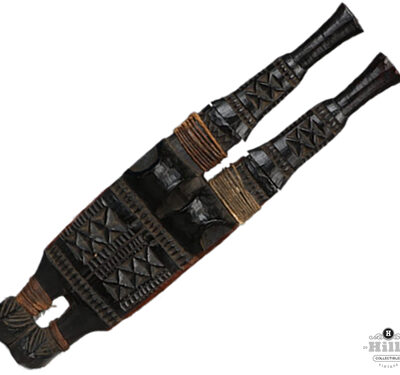
Museum-Grade 19th Century Shona Double Bakatwa
- Origin: Shona People, Zimbabwe
- Material: Hand-Forged Iron, Indigenous Hardwoods, Sinew Binding
- Circa: Mid-to-Late 19th Century
- Provenance: Sourced from the UK market; formerly held by a premier specialist in Southern African ethnographic arts.
-
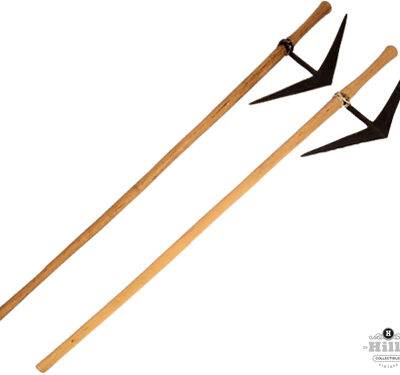
Pair of Ceremonial Swazi Battle Axes (iNhlendla)
- Type: Ceremonial Battle Axe / Royal Staff (iNhlendla)
- Origin: Botswana
- Materials: Hand-forged Iron, Indigenous Hardwood, Rawhide
- Dimensions: Approx. 150cm – 160cm in length
- Provenance: Documented, US Market
-
Philippine Igorot Falfeg Spear With Socket Tip and Spiked Metal Base
- Period: Late 19th – early 20th century
- Origin: Cordillera Central, Northern Luzon, Philippines
- Primary use: among Bontok highland communities (Mountain Province areas)
- Provenance: Ex-private USA collection
- Materials: Hand-forged iron single-barbed spearhead with socketed base, traditional woven rattan ferrule reinforcement at the socket joint, tropical dark hardwood shaft, and spiked conical iron butt cap.
-
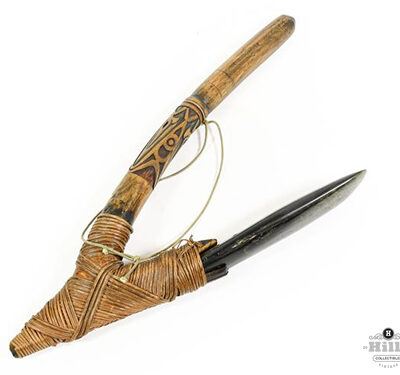
Polynesian Ceremonial Adze (Toki)
- Type: Adze.
- Period: Late 19th to Early 20th Century
- Provenance: UK market; documented.
-
Prestige Shona Ceremonial Axe (Gano)
- Origin: Shona People, Zimbabwe (Southern Africa)
- Period: 19th – Early 20th Century
- Provenance: UK Market, documented
- Materials: Fine-grained indigenous hardwood, hand-forged iron, brass wire
- Approximate Dimensions: 50–55 cm overall (typical for prestige examples; blade span ~15–18 cm)
-
Prestige Zulu Wire-Bound Knobkerrie (Iwisa)
- Region: KwaZulu-Natal, South Africa
- Material: Dense Indigenous Hardwood, Hand-Drawn Metal Wire
- Circa: Late 19th / Early 20th Century
- Length: 67 cm (Approx. 26.4 in)
- Head Weight: Significantly heavy/solid core
Provenence: The significance of this piece is heightened by its distinguished provenance, tracing through two of the most respected names in the field of African and Tribal Art: