

Scorpion Tail Axe – “Nehanda III”
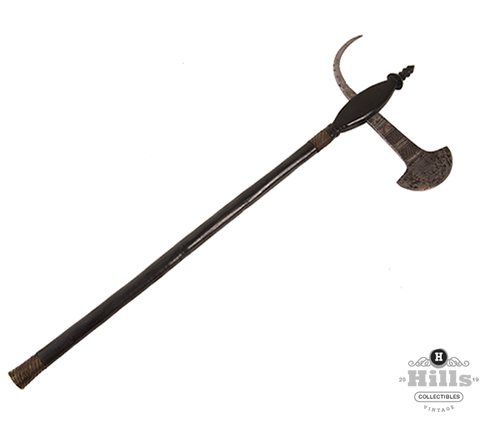
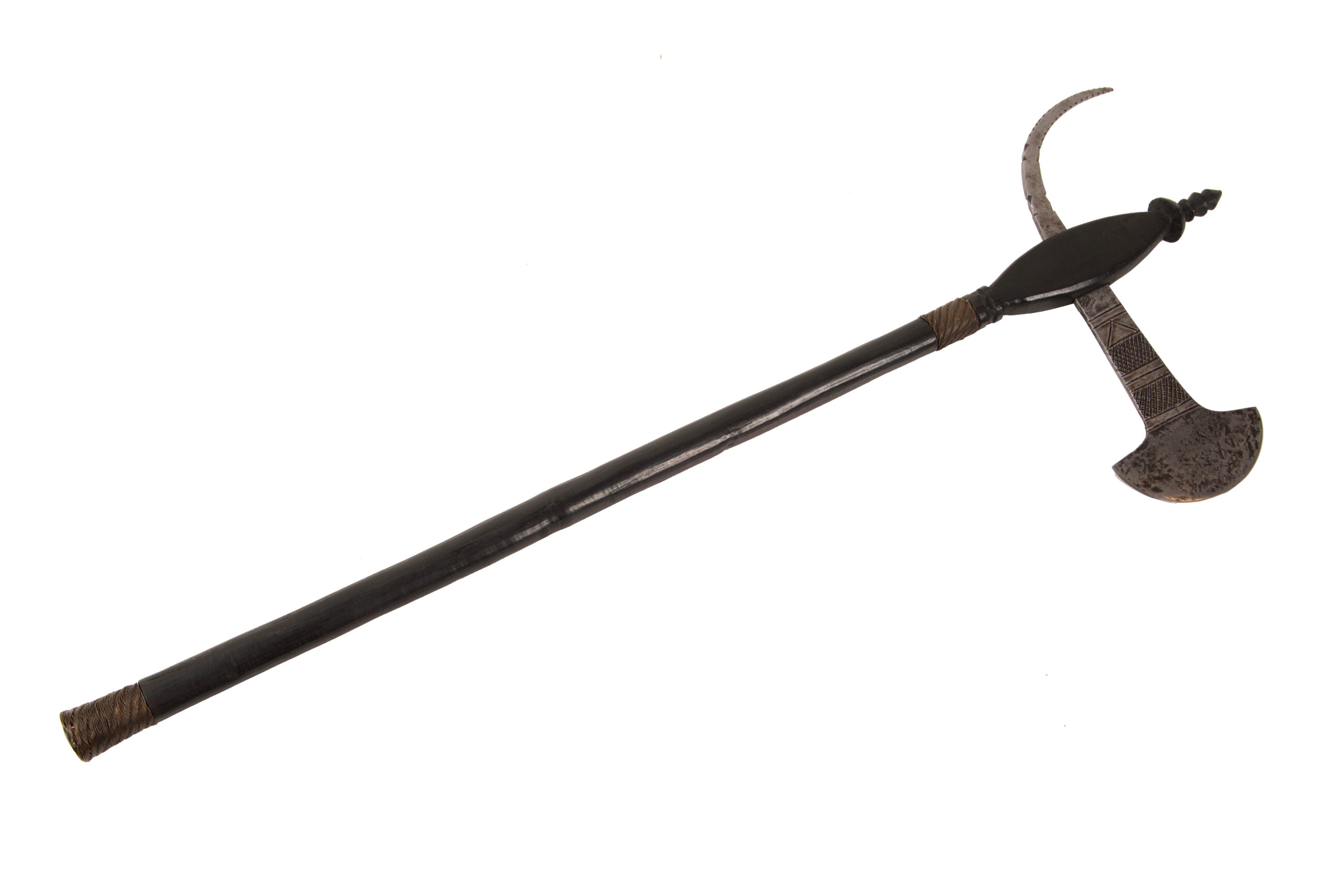
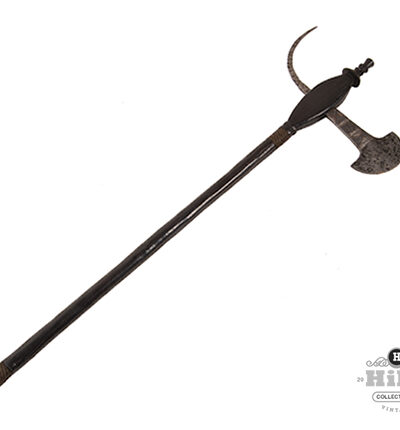
The Nehanda III is the most refined iteration of the Scorpion Tail series. It is defined by an elongated, aggressively curved tang and a “weighted” half-moon blade that demonstrates an expert command of iron-smelting. This specific type was historically used in the most sacred ceremonies within the Zambezi Basin, serving as a physical anchor for ancestral presence during the Bira (spiritual possession) rites.
Series Identifiers:
The Scorpion Tail series based on several advanced characteristics:
-
The “Hyper-Curved” Tail: Unlike the standard series, the Type III features a more pronounced, slender, and needle-like protruding tang. This “scorpion sting” is forged to a fine point, requiring exceptional carbon control to prevent the iron from becoming brittle.
-
Balanced Half-Moon Blade: The blade is wider and more symmetrical, featuring a deep, dark patina that results from traditional oil-quenching.
-
The Makonde Master-Handle: The shaft is carved from premium Makonde wood, specifically chosen for its density and its ability to hold a mirror-like polish without the use of modern varnishes.
Material Sophistication: The Two-Tone Makonde Shaft
The Nehanda III handle is a work of art in its own right. Regional master carvers utilized a sophisticated technique seen clearly in this example:
-
The Heart-and-Sapwood Contrast: The carver has intentionally selected a section of wood where the pale, creamy sapwood meets the charcoal-black heartwood.
-
Visual Symbolism: In Shona cosmology, this contrast represents the interconnectedness of the living (light) and the ancestors (dark). The straight, unwavering grain symbolizes the “True Path” of the leader or medium holding it.
The Sacred Geometry: Shona Incisions
The iron tang is decorated with “Zvibvunzo” (ceremonial incisions). In the Nehanda III series, these patterns are typically more complex:
-
Triangular Hatching: Often representing the scales of the Pangolin (Haka), the most sacred animal in Shona culture, reserved only for kings.
-
Copper Wire Binding: The copper accents are not merely decorative but functional, providing a non-slip grip during high-energy ritual dances and ensuring the axe remains “spiritually grounded.”
Cultural and Historical Role
Across the Shona-speaking regions of Zimbabwe and Mozambique, the Nehanda III was a Dynastic Status Symbol.
-
Ritual Authority: Used to command silence and respect during community gatherings.
-
Supreme Lobola: While standard axes were common in marriage contracts, a Nehanda III was a “Legacy Gift,” often passed down through generations to solidify alliances between powerful families.

Reviews
There are no reviews yet.